



Recognising Real Silver Coins: Check Fineness and Product Details Properly
Two coins that look similar can be made of different materials: one is made of fine silver, the other is silver-plated. If you want to recognise genuine silver coins, check the material specification of the selected version rather than the colour or coin shape. At SilverCoin Artworks, our Austrian workshop with an online shop for personalised photo coins, we offer versions made from 1 oz .999 fine silver as well as silver-plated versions.
Status: November 2026
How can I tell whether a silver coin is made of real silver?
Before you buy, the specific material designation is your first point of reference. If the selected coin says ".999 fine silver", that describes its base material and its fineness. If it says "silver-plated", the specification describes a silver coating and not a coin made of solid fine silver.
First open the description of the individual product. Then select the version you want and read again which material is specified for exactly that choice. Especially when an offer includes several versions, the product name alone tells you too little about the piece in your shopping cart.
A material specification helps you assess an offer. Whether a piece you already own really matches the stated composition cannot, however, be independently confirmed from a description. This distinction is particularly important if you have a coin without reliable information.
What does .999 fine silver mean compared with "silver-plated"?
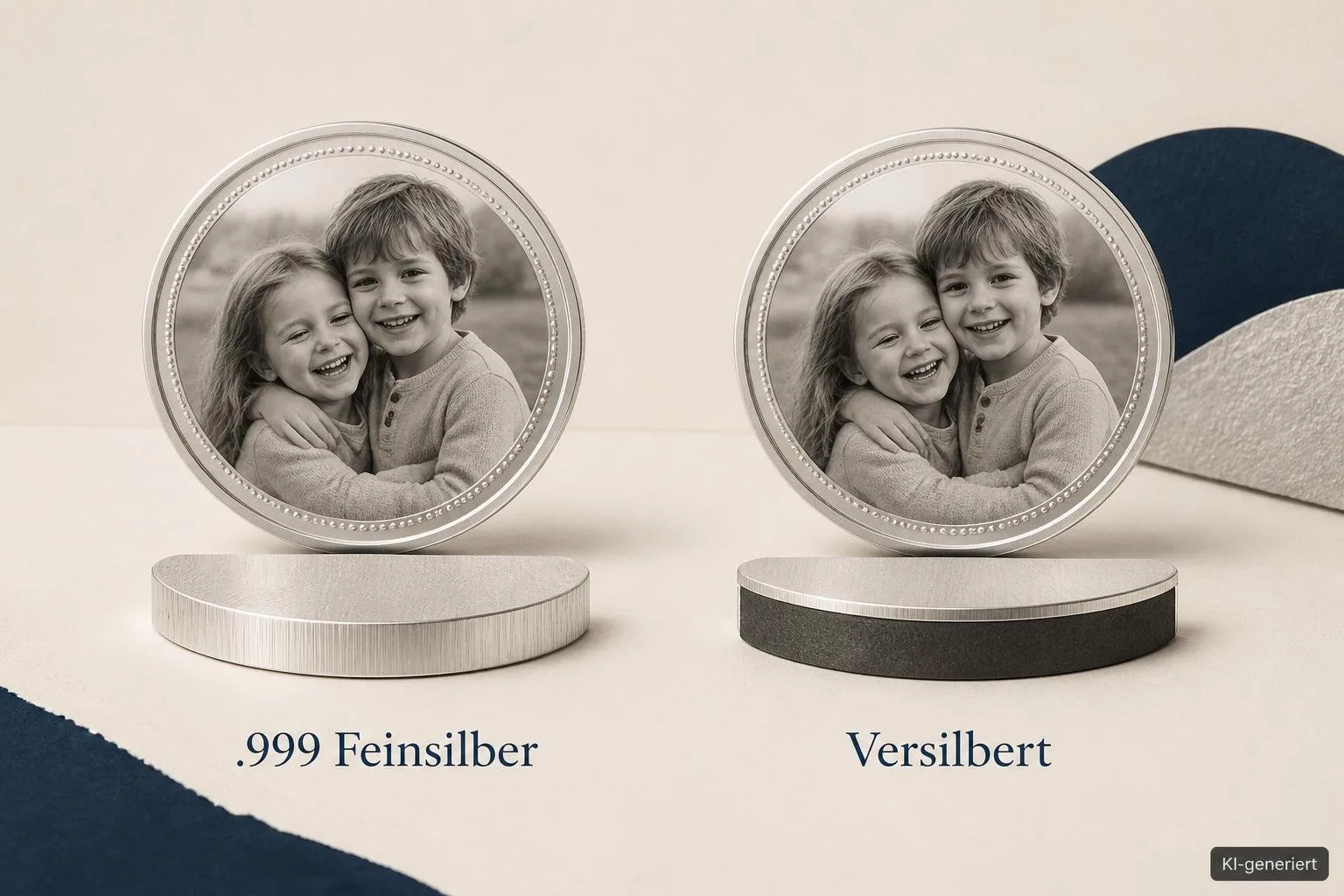
The number .999 denotes a fineness of 999 parts per thousand silver. It refers to the material stated for the piece. "Silver-plated", on the other hand, means that a surface has been coated with silver; the word alone tells you nothing about the silver content of the material underneath.
A photo coin made of .999 fine silver and a silver-plated photo coin can show the same image and have the same round shape. The design does not make their materials equivalent. For this reason, you should not treat "silver look", "silver-plated" and ".999 fine silver" as interchangeable terms when reading an offer.
Which material specification applies to the specific product?
For our fine silver photo coins, the product information lists 1 troy ounce, i.e. 31.1 grams, and .999 fine silver. This applies to the fine silver version marked accordingly, not generally to every product in our range. For a silver-plated version, the coating is the decisive material distinction.
When choosing a version, check whether the designation changes in the selection field, in the description or in the shopping cart. If you want to order fine silver, the selected version in particular must be explicitly labelled as such. If there is no clear assignment, you should clarify the material question before ordering.
Why does the coin shape alone not prove a silver content?
A round shape, a motif or a silver-coloured surface shows how a piece is designed. None of these features states the fineness. A personalised photo coin may, for example, be offered in fine silver, while a similarly designed version is silver-plated.
A printed photo does not change this distinction either. If you would like to read more about the design of such a version, our article on the personalising of a silver coin covers this area. For the question of material, the specification for the selected version remains decisive.
When you choose a photo coin, first decide on the material version you want and check its specification again before completing your order.
What can I read from the product description?
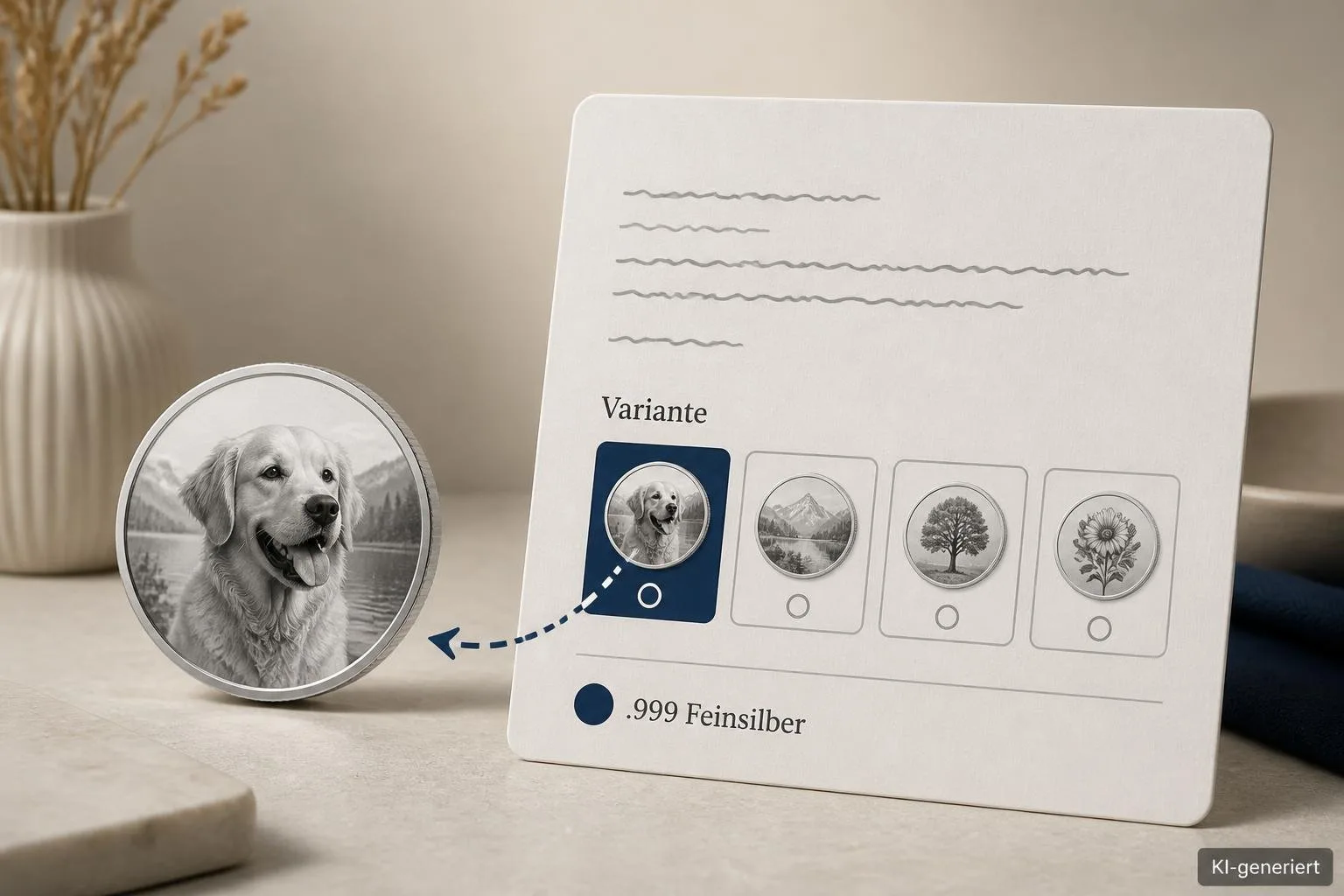
A product description can tell you which material the seller states for a particular piece. For your decision, what matters is whether this information is complete and clearly belongs to the selected version. A general statement about the range is not sufficient for this.
Checking the Material and Version of the Selected Option
For a check before purchase, you need the product page and, if available, the version selection. Read the material specification in this order: Which product is selected? Which version is active? Are the fineness and weight stated explicitly for this version?
For a fine silver photo coin from our range, "1 oz", "31.1 grams" and ".999 fine silver" together can identify the version described. Nevertheless, check the details on the specific offer rather than transferring a statement from another product. The recognisable result of your check is a clear assignment: you know whether the selected version is offered as fine silver or as silver-plated.
Read weight information together with the material designation. The entry "1 oz" alone does not tell you whether a coin is made of .999 fine silver. Conversely, "silver-plated" without further details states neither the silver content of a coating nor the material beneath it; you should not infer such details from appearance.
Do Not Equate Material Declaration with Authenticity Testing
A material declaration is the seller's statement about its product. It enables a targeted selection and a query if information is missing or contradictory. An independent examination of the coin in question does not replace the description.
For a piece you already own, the situation can differ from buying in the online shop: a packaging or an earlier offer description must first be clearly attributable to that piece. If this attribution is unclear, the statement about its silver content also remains open.
What cannot be reliably claimed without additional documentation?
Based on the available material, no reliable guide for an authenticity test can be derived. It would therefore be misleading to present a single observation of colour, sound or surface as conclusive proof of .999 fine silver.
Likewise, you should not automatically conclude that an item is counterfeit because a detail is missing. Without a clear material description, you only know at first that the information you need for your decision is missing. Ask for the exact specification; if you need to independently verify the authenticity of a piece you already have, you will need a suitable professional assessment.
Which next step suits my silver coin?
First decide which question you want to answer. Before ordering, the task is to clearly identify the offered material finish. For a coin you already own, you also need to check whether the existing details actually relate to this piece and whether that basis is sufficient for you.
For an offer, open the specific product page, choose the variant you want and compare the material designation, fineness and, where applicable, weight with what you expect. If “Fine silver or silver-plated?” remains unanswered, clarify it before you buy. If you want to weigh different purchase purposes beyond the material question, you will find a dedicated guide on buying a silver coin.
For an existing coin, gather the details that can reliably be linked to this piece. If such details are missing or you need independent proof of authenticity, do not rely on appearance alone; have the piece checked by a professional.